How to Work Out Anion Gap from BMP Results
What Is the Anion Gap?
The anion gap is a derived value that helps doctors assess electrolytes and detect hidden problems in the body’s serum chemistry. It is commonly used as part of an acid-base balance review, especially when looking for an acid-base disorder such as metabolic acidosis.
Although it is not directly measured, the anion gap estimates the difference between typically measured positively charged ions and negatively charged ions in the blood. That difference can suggest Check out here the presence of extra acids or other unmeasured anions that are not listed on routine lab values.
In practical terms, the anion gap is a useful diagnostic indicator when reviewing a metabolic panel or a basic metabolic panel. anion gap clinical significance It can help explain electrolyte imbalance, guide a metabolic acidosis workup, and support broader clinical interpretation of serum electrolytes.
Which basic metabolic panel Results Do You Need?
To work out the anion gap from BMP results, you typically need 3 core lab values: sodium, chloride, and bicarbonate. These are the main numbers included in a standard basic metabolic panel.
The following components are often reported as:
- Serum sodium
- Serum chloride
- Serum bicarbonate or total CO2, depending on the lab
Potassium may also show up on the BMP, but it is not always included in the anion gap formula. Many clinicians apply a simplified version that excludes potassium, while others include it in specific settings. Understanding which version your calculator uses matters for precise electrolyte measurement and interpretation.
If you are using an anion gap calculator, make sure the numbers come from the same lab report and the same laboratory reference system. Mixing values from different sources can lead to unexpected results.
Anion Gap Formula Explained
The basic anion gap formula relies on the idea of electrical neutrality. The body works hard to keep total positive and negative charges balanced, even though only some ions are directly measured. The gap represents the portion of that balance accounted for by other ions, including proteins and organic acids.
The usual calculation formula is:
Anion gap = Sodium − (Chloride + Bicarbonate)
Some clinicians and labs use a formula that includes potassium:
Anion gap = Sodium + Potassium − (Chloride + Bicarbonate)
The potassium-inclusive version generally yields a higher number, so the normal range will differ. For this reason the calculator method and the lab’s reference range should be aligned before making conclusions.
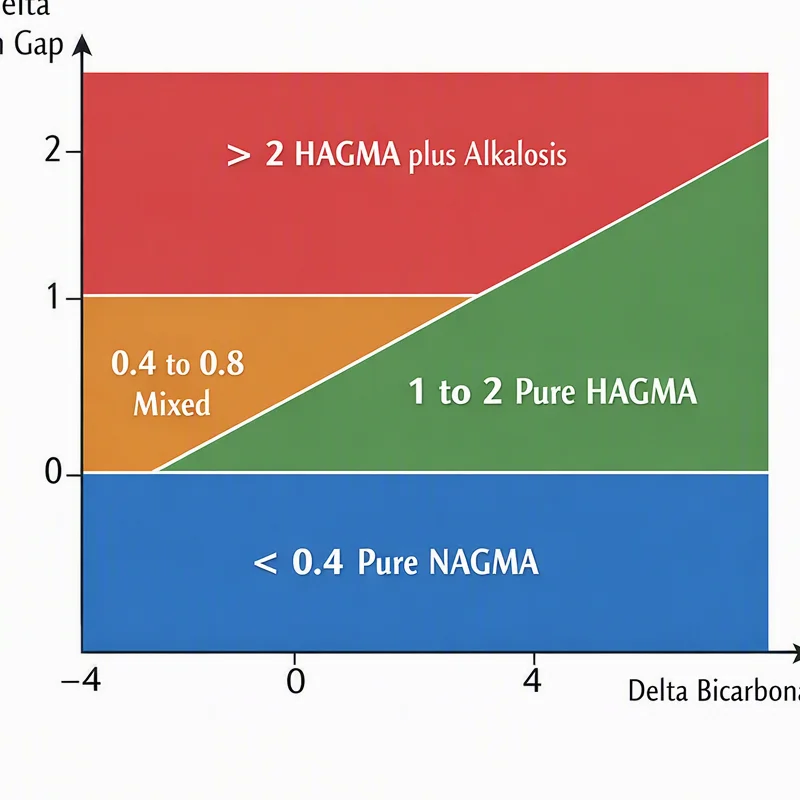
Calculation steps are simple:
- Begin with the sodium value.
- Add chloride and bicarbonate together with the common formula.
- Subtract that sum from sodium.
- Compare the result with the lab’s normal range.
This simple calculation can reveal whether the body is likely retaining extra acids or not having enough important unmeasured ions.
How to Calculate Anion Gap from BMP Readings
An anion gap calculator makes the process, but it helps to know the formula behind it. The most common method is sodium minus chloride minus bicarbonate, which is the same as sodium minus the total of chloride and bicarbonate.
Here is a sample example calculation using standard BMP readings:
- Sodium: 140
- Chloride: 102
- Bicarbonate: 24
First, add chloride and bicarbonate.
102 + 24 = 126
Step 2: Subtract from sodium.
140 − 126 = 14
The anion gap value in this example is 14. Whether that is normal depends on the lab’s BMP interpretation and laboratory reference. Some reference intervals regard 14 acceptable, while others may view it as mildly elevated or high-normal.
If potassium is included, the result changes. For example:
- Sodium: 140
- Potassium: 4
- Chloride: 102
- Bicarbonate: 24
140 + 4 − (102 + 24) = 18
This shows why a calculator must explicitly state whether potassium is included. A small change in formula can shift the clinical picture, especially when evaluating metabolic acidosis or other acid-base concerns.
What Is a Normal Anion Gap?
A normal anion gap is influenced by the lab, the way it is calculated, and whether potassium is included. No single universal number that applies to every result. Instead, the reference range from the reporting lab should direct interpretation.
In general, a typical anion gap without potassium is often somewhere in the low to mid teens, but the exact range varies because of lab variation and measurement methods. That means a result that looks slightly high in one system may be normal in another.
Albumin also affects the baseline gap. Because albumin is a negatively charged protein, lower albumin levels can make the anion gap appear lower than expected. This is why a result should never be reviewed in isolation if albumin is abnormal.
When using an anion gap calculator, always compare the result with the correct normal range for that specific assay and remember that the reference interval is a starting point, not a diagnosis by itself.
Elevated Anion Gap versus Typical Anion Gap
A high result often suggests high anion gap metabolic acidosis, which indicates extra acids are gathering in the body. This type of metabolic acidosis usually occurs when unmeasured anions accumulate faster than the body can remove them.
Typical reasons of high anion gap metabolic acidosis include:
- Lactate acidosis
- Acidosis from ketones
- Renal insufficiency
- Poison ingestion
A typical anion gap does not rule out metabolic acidosis. It may instead suggest normal anion gap metabolic acidosis, sometimes called non-gap acidosis. In those cases, the body depletes bicarbonate or retains chloride in a way that keeps the gap within the expected range.
This distinction is significant during a metabolic acidosis workup. A high gap indicates acid build-up from sources not directly measured on the BMP, while a normal gap can indicate gastrointestinal bicarbonate loss, renal tubular problems, or other chloride-related shifts. Careful clinical interpretation is crucial.
How Albumin Influences the Anion Gap
Albumin is a key determinant of the anion gap because it is a primarily negatively charged protein in the blood. When albumin is decreased, the calculated gap may look lower than it truly is. For this reason hypoalbuminemia can mask an abnormal acid-base picture.
In such cases, clinicians may use a corrected anion gap, which adjusts the result upward to account for low albumin. This process is sometimes called albumin correction.
Why does this matter? If albumin is reduced, fewer negatively charged proteins are accessible to balance the measured cations, so the apparent gap shifts. Without correction, a patient with significant acid buildup may appear closer to normal than they really are.
When reviewing BMP values, always ask whether albumin was measured at the same time. If not, the anion gap can still be useful, but the interpretation becomes less precise. Albumin adjustment is especially valuable when the calculated value is borderline or when the overall picture suggests acidosis but the gap seems unexpectedly low.
Common Causes of an Abnormal Anion Gap
An elevated anion gap is usually a hint, not a final diagnosis. The result can help pinpoint the cause of an acid-base problem, but it should be interpreted alongside signs, other lab values, and the overall clinical picture.
Common causes of a high gap include:
- Lactate buildup, frequently related to reduced oxygen delivery, shock, or severe illness
- Ketone acidosis, which can occur with diabetes, starvation, or alcohol use
- Renal failure, where acids are not cleared efficiently
- Toxic exposure, including certain alcohols or medications
These conditions promote acid accumulation and introduce more unmeasured anions into the blood. That results in a higher gap and may be a useful clue in the diagnosis of metabolic acidosis.
A reduced or normal gap can also be abnormal in some settings, especially when albumin is low or when there is excess chloride. The main point is that the anion gap is a screening tool that helps guide further testing, not a stand-alone answer.
Frequent Mistakes When Using an Anion Gap Calculator
Even a simple calculator can result in errors if the inputs or formula are wrong. The most common mistakes are easy to avoid once you know what to watch for.
- Testing error: A mislabeled or contaminated sample can create a misleading result.
- Inconsistent units: Make sure sodium, chloride, and bicarbonate are all in the same units used by the formula.
- Including potassium: Some calculators include potassium, while others do not. This changes the result and the expected normal range.
- Bicarbonate reading: On some reports, total CO2 is used as a bicarbonate estimate. Know what the lab actually measured.
Other pitfalls include comparing results from different labs, ignoring albumin, or assuming every elevated gap means the same disease. Accurate use of an anion gap calculator requires attention to the exact BMP results, the reporting method, and the broader context of the patient’s condition.
If the value seems discordant with the remainder of the chemistry report, consider whether the issue is due to a genuine condition or simply a technical problem. Good clinical interpretation starts with checking the numbers before making conclusions.
FAQ About Calculating Anion Gap from BMP Results
How do you calculate anion gap from BMP results?
Work with the BMP values for Na, chloride, and bicarbonate. The standard formula is sodium minus chloride minus bicarbonate, or to be precise sodium minus the sum of chloride and bicarbonate. An anion gap calculator can compute the result instantly, but it is essential to confirm whether potassium is included and whether the lab’s reference range matches the formula being used.
What BMP values are used in the anion gap formula?
The main BMP values are sodium, chloride, and bicarbonate. Some forms of the calculation also include potassium. If potassium is part of the formula, the result will be greater, so the calculator and the lab’s electrolyte panel convention must align.
What is considered a normal anion gap?
A normal anion gap depends on the laboratory reference range and the way it is calculated. Because of lab variation, there is no single universal number. Always compare the result to the specific lab report and verify whether the calculation included potassium.
Why does low albumin change the anion gap?
Albumin is a negatively charged protein that contributes to the normal balance of charges in blood. When albumin is low, the measured gap can appear reduced than it truly is. That is why clinicians may use a corrected anion gap when hypoalbuminemia is present.
What does a high anion gap usually mean?
A increased result often suggests high anion gap metabolic acidosis, which can occur with lactic acidosis, ketoacidosis, renal failure, or toxin ingestion. It usually indicates the presence of extra unmeasured anions and should be interpreted as part of the overall acid-base picture.